When the Overall Suicide Rate Falls but Young People Are Still Slipping Through
Why KELY is doubling down on prevention inside Hong Kong's schools
Hong Kong recently received a mixed report card. According to the latest suicide mortality statistics released by The Samaritan Befrienders Hong Kong, the city recorded 1,019 deaths by suicide in 2025—yielding a rate of 13.57 per 100,000 people. This represents a decrease from the 1,138 cases logged in 2024, which had marked a ten-year high (South China Morning Post).
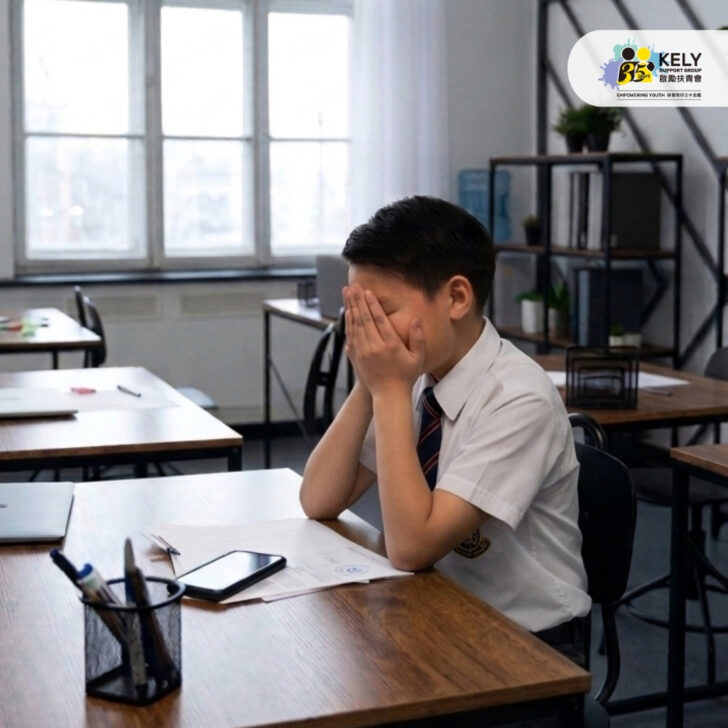
While this overall downward trend is genuine progress and deserves to be acknowledged, a sobering figure is buried within the same dataset: among those aged 19 and under, deaths rose from 35 in 2024 to 47 in 2025—an increase of over 30 per cent, pushing the youth suicide rate to 4.72 per 100,000, the highest recorded in a decade. In short, while the city's overall curve is bending downward, the youth curve is moving in the opposite direction. Whatever is working for Hong Kong at large is not yet reaching our young people.
This is Not Simply a Resourcing Problem
David Cheng Chung, executive director of The Samaritan Befrienders Hong Kong, put it precisely: "This is not a problem of insufficient resources, but that our resources can't catch up with the needs of teenagers, which are influenced by changes in society and family dynamics" (SCMP).
The organisation has strongly advocated for regular risk screening and specialised intervention services to be formally integrated into the city’s youth suicide response. Crucially, they call for the second tier of the government's Three-Tier School-based Emergency Mechanism—the off-campus support network—to formally include suicide prevention organisations.
At KELY Support Group, we recognise this diagnosis. The Three-Tier Mechanism, regularised in the 2025 Policy Address alongside the 4Rs Mental Health Charter, is a vital piece of institutional architecture. Yet, by design, it activates only after a young person has already been flagged as being at risk. The harder, more vital question is: what happens in the months and years leading up to that point, and whom does a struggling 15-year-old turn to first?
Young People Turn to Each Other
Our own Youth Mental Health Survey revealed a striking reality: 60 per cent of young people do not seek help when facing mental health challenges, and 62 per cent of those aged 14 to 24 would rather turn to a peer than to an adult or a professional.
That finding completely reframes the challenge. If most distressed young people never reach a counsellor, a social worker or hotline, then the true first responder in a youth mental health crisis is almost always another young person — frequently someone with no training, no boundaries, and no idea how to handle what they have just been told.
Therefore, one of the most powerful interventions available to us is not just building a larger clinical system, but ensuring that when a young person finally speaks up, the friend on the other side knows how to respond.
Talk2Me: Training the First Responder
This is the foundational logic behind our Talk2Me Peer Supporter Training Certificate Programme. Established in 2014 and redesigned around an evidence-informed peer support model, Talk2Me is a 10-hour, evidence-informed certificate course delivered directly in secondary schools to cohorts of 15 to 20 students, available in both English and Chinese.
We are explicitly clear with teenagers: we are not training them to be counsellors. Instead, we are training them to notice, to listen without flinching, to stay present, and to act as a bridge — shortening the distance between a peer in distress and existing professional help.
Social-Emotional Learning: Prevention at Scale
While peer supporters form an essential safety net, Social-Emotional Learning (SEL) acts as the foundational floor beneath it.
Social Emotional Learning empowers young people to build self-awareness, emotional resilience, and positive coping skills. Through hands-on activities, guided discussions, and reflective exercises—such as the Mindfulness Jar—participants explore topics including stress management, emotional well-being, values, and healthy decision-making. Rather than a traditional lecture, the workshop creates a safe environment that fosters peer support, allowing young people to connect, learn, and develop practical strategies to support their mental well-being in everyday life.
This is Level 1 work — universal, preventive, delivered to whole classrooms before anyone is flagged as a case. While it is often the least visible part of the system (where success looks like "nothing happening"), it remains foundational.
What We Are Asking For
The 2025 statistics make three imperatives crystal clear:
Fund prevention is as serious as crisis response. A regularised Three-Tier Mechanism is necessary, but not sufficient. Universal Level 1 SEL delivered consistently across secondary school years is what ultimately reduces the volume of students reaching Tier 2 or Tier 3.
Incorporate specialists into the off-campus network. NGOs already working inside schools should be formally recognised within the government mechanism rather than operating separately alongside it.
Treat peer support as core infrastructure. If 62 per cent of young people confide in friends first, trained peer supporters are not a luxury—they are a vital component of the system youth actively rely on.
Our ambition is to continue expanding this protective layer. With support from the Kindness in Community Fund, KELY is actively building a Youth Mental Health Connectors Community to train and certify 100 secondary and tertiary students as peer supporters by 2027—scaling a youth-led movement rather than relying on isolated workshops.
Forty-seven young lives were lost last year. Behind each tragedy were classmates, friends, and siblings who may have sensed something was wrong but did not know what to say. Together—schools, NGOs, funders, and the government—our shared responsibility is ensuring that the next young person who reaches out finds someone equipped to listen.
Schools interested in Talk2Me or the SEL curriculum can contact KELY Support Group at +852 2521 6890 or via email at contact@kely.org. Learn more at kely.org.
If you or someone you know is experiencing distress or suicidal thoughts, confidential support is available in Hong Kong:
The Samaritans (Multilingual, 24 hours): 2896 0000
Suicide Prevention Services: 2382 0000
Open Up (24-hour online chat): https://www.openup.hk/